Living in Indian Trail, NC (2026 Guide)
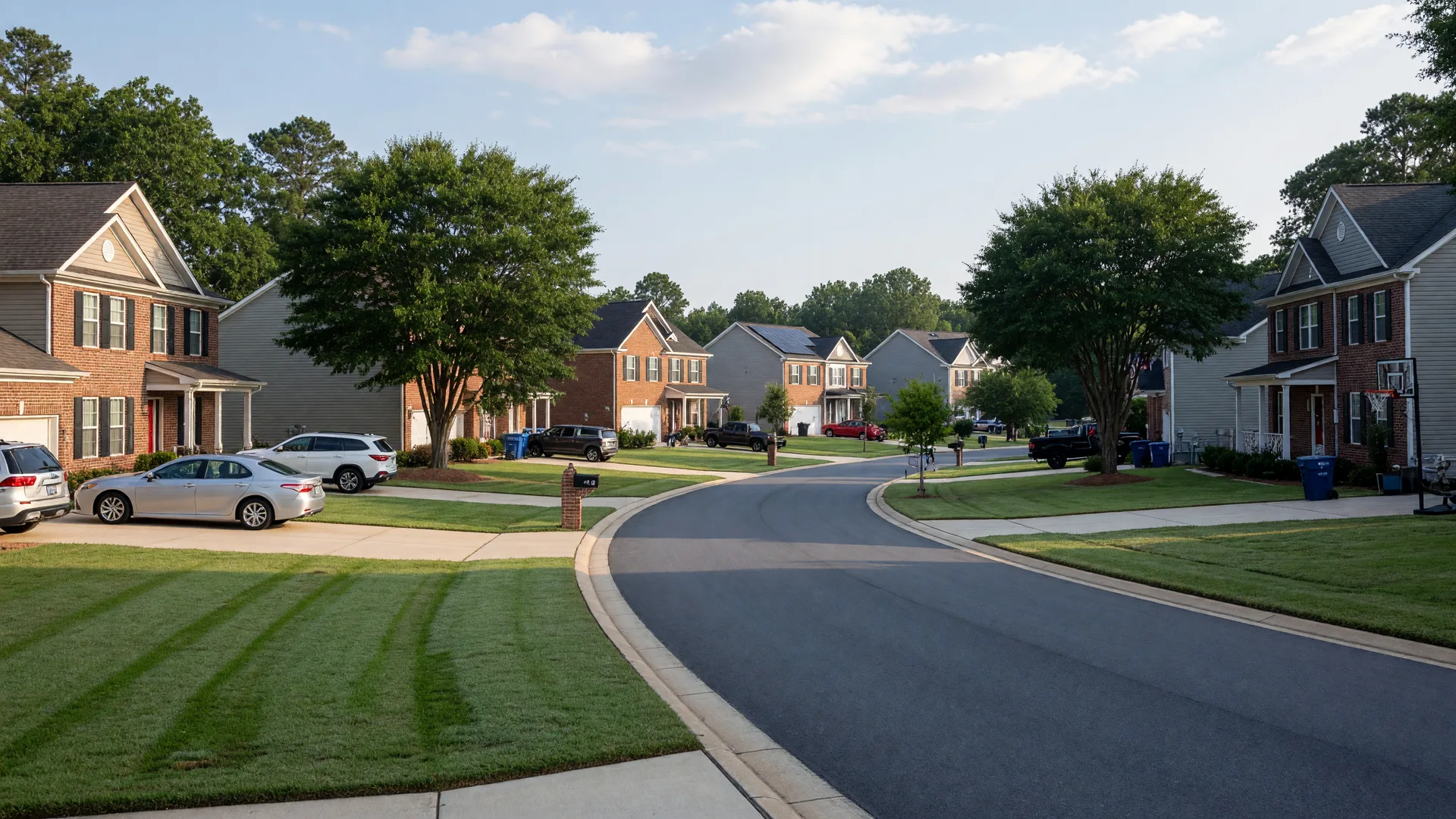
Indian Trail is a fast-growing town in Union County, North Carolina, about 17 miles southeast of Uptown Charlotte. It is one of the larger suburban towns in the county, with established subdivisions, newer master-planned communities and a steady stream of new construction. Housing spans move-up single-family homes and townhomes, and the town's addresses are served by Union County Public Schools.
Indian Trail is a fast-growing town in Union County, North Carolina, about 17 miles southeast of Uptown Charlotte. It is one of the larger suburban towns in the county, with established subdivisions, newer master-planned communities and a steady stream of new construction. Housing spans move-up single-family homes and townhomes, and the town's addresses are served by Union County Public Schools. Here is the neighborly, straight-from-the-streets picture of Indian Trail, NC: what the housing looks like, what a typical budget gets you, how the schools and commute actually work, and where to spend a Saturday.
Real Estate Market Snapshot (2026)
These are approximate research ranges based on recent local market conditions, not a guarantee of current or future pricing. Prices move with supply, interest rates and the broader economy, and exact pricing varies by block and condition.
Approximately $280K to $800K, with most move-up single-family homes in the $400K to $600K range, townhomes starting lower and estate lots at the top; recent median sale prices have run about $435K to $475K.
Mostly single-family subdivisions from the 1990s through today, plus newer master-planned communities with pools, trails and dog parks, and a growing number of townhomes.
New construction keeps the pipeline steady and established neighborhoods turn over regularly; most buyers here are looking for space and amenities at a lower price per square foot than inside Mecklenburg County.
Exact pricing varies by subdivision, lot and finish level, and new-community pricing changes as phases release; treat these as approximate research ranges, not guarantees.
Popular Sub-Areas & Neighborhoods
Indian Trail, NC isn't one single feel; it is a collection of pockets, each with its own housing and character. These are the sub-areas worth knowing by name when you start looking.
-
Brandon Oaks: One of the largest neighborhoods in town, with pools, trails and a community center along the Brandon Oaks corridor.
-
Arbor Glen: An established resort-style community off Potter Road with amenities and mature landscaping.
-
Crossing Paths and Chestnut Square: Homes near the town parks, which include playgrounds, tennis and soccer fields and an amphitheater.
-
Hemby Bridge and southern Indian Trail: Newer construction and larger lots toward the southern edge of town, with quick access to US-74.
-
Indian Trail Southwest: Established single-family neighborhoods on the southwest side, close to the Monroe Expressway.
Cost of Living
Indian Trail's home prices run below Charlotte-city medians, which is a big part of its draw; recent local reporting has put the town's property tax rate around $0.60 per $100 of assessed value, and day-to-day costs are generally in line with the wider metro. Exact figures depend on your property and lifestyle. As with the home prices above, treat cost-of-living figures as approximate research ranges, never guarantees; your actual budget depends on mortgage rates, property taxes, insurance and lifestyle choices.
Income tax note: North Carolina's flat personal income tax is 3.99% as of 2026, per the NC Department of Revenue. This applies state-wide, so it is the same rate whether you settle in Indian Trail, NC or anywhere else in the state.
Schools
Indian Trail is served by Union County Public Schools. Addresses in town generally fall into the Sun Valley cluster (Sun Valley Elementary, Middle and High) or the Porter Ridge cluster (Porter Ridge Elementary, Middle and High), with additional elementary options such as Poplin, Shiloh, Hemby Bridge and Sardis. Attendance boundaries are set by address and can change; the two clusters are split by street, so verify the exact school for any home before buying.
Always verify: use the district's official Union County Public Schools website (ucpsnc.org) to confirm the school assigned to any exact address, and double-check with the district before buying, since assignment maps can change.
Commute to Uptown Charlotte
These are estimates, not fixed numbers: actual drive times swing with the day, the weather, construction and where exactly in Indian Trail, NC you live. Drive the route you would actually take, at the time you would actually take it, before you commit.
Estimated 25 to 40 minutes to Uptown Charlotte at rush hour via US-74 and the Monroe Expressway; Matthews is about 10 to 15 minutes.
Closer to 20 to 28 minutes off-peak.
Parks, Greenways & Dining
Parks & greenways: Indian Trail's town parks include Crossing Paths and Chestnut Square, with playgrounds, tennis and soccer fields and an amphitheater, and trails and dog parks sit inside several residential communities.
Dining & coffee spots: Most dining is newer retail along US-74 and the town's main corridors, with a broad mix of quick-service and sit-down spots; Matthews' downtown and Uptown Charlotte are short drives for more options.
Moving to Indian Trail, NC? 10 Questions Answered
Oct 12, 2026 ·
In 1990, Indian Trail was home to fewer than 2,000 people. By 2020, it had nearly 40,000. That kind of growth doesn't happen by accident. Families kept discovering what locals already knew: newer homes, more space for the money, good schools, and Charlotte just down the road. Welcome to Indian Trail, North Carolina.
For relocating buyers, Indian Trail offers suburban value with a strong community feel. Then the questions come. What does a home cost? Which schools? How long is the commute? How does Indian Trail compare to Matthews or Mint Hill?
Whether you're moving from St. Louis or across Charlotte, here are straight answers to the 10 questions buyers ask most before moving to Indian Trail.
1. What is it like to live in Indian Trail?
Indian Trail is a fast-growing, family-focused suburb with plenty of parks and amenities. It's one of the largest towns in Union County, North Carolina, about 17 miles southeast of Uptown Charlotte.
Life here often includes:
- Neighborhood pools, trails, and dog parks in master-planned communities
- Town parks with splash pads, sports fields, disc golf, and an amphitheater
- Community traditions, including a Fourth of July parade that's among the biggest in the Charlotte area
- Easy errands along US-74 and the town's main corridors
Indian Trail includes Brandon Oaks, Arbor Glen, the Crossing Paths and Chestnut Square area, Hemby Bridge and southern Indian Trail, and Indian Trail Southwest. Residents are largely young families and move-up buyers who want space at a lower price per square foot than inside Mecklenburg County.
2. How much does it cost to live in Indian Trail?
Indian Trail's prices run below Charlotte city medians, a big part of its appeal. Homes typically range from about $280,000 to $800,000, and recent median sale prices have been around $435,000 to $475,000.
What the spectrum looks like:
- Townhomes: a growing, more affordable segment
- Move-up single-family homes: mostly in the $400,000 to $600,000 range
- Newer master-planned communities: pools, trails, and clubhouses
- Estate lots and larger homes: at the top of the range
Homes inside town limits pay Town of Indian Trail taxes on top of Union County taxes. Ask your agent for the combined rate on any home you're considering. Day-to-day costs are generally in line with the wider metro.
Buy vs. rent tip: For families who want a yard and space to grow, owning here often costs less per square foot than in Charlotte, and it builds equity in a town that keeps growing.
3. What schools serve Indian Trail?
Indian Trail is served by Union County Public Schools, not Charlotte-Mecklenburg Schools. Most addresses fall into one of two clusters:
- Sun Valley cluster: Sun Valley Elementary, Middle, and High
- Porter Ridge cluster: Porter Ridge Elementary, Middle, and High
Other elementary schools serving parts of town include Poplin, Shiloh, Hemby Bridge, and Sardis.
Things to know:
- The two clusters are split by street, so neighbors can attend different schools
- Boundaries can change as new neighborhoods open
- Charter and private options are available in the area
Important: Always confirm the assigned schools for a specific address with Union County Public Schools before you make an offer.
4. What is there to do in Indian Trail?
Indian Trail's town parks are a big part of daily life, especially for families.
Local highlights:
- Crooked Creek Park: an inclusive playground, a splash pad, a dog park, and a disc golf course
- Chestnut Square Park: sports fields, tennis, sand volleyball, and community events
- Crossing Paths Park: a smaller amphitheater and gathering place near the town's original center
- Family Fun Day: amusement rides, food trucks, live music, and fireworks at Crooked Creek Park
- Fourth of July parade: one of the largest in the Charlotte metro
- Community amenities: pools, trails, and dog parks in many neighborhoods
Most dining and shopping are along US-74 and the town's main roads. Matthews' downtown is about 10–15 minutes away, and Charlotte's bigger attractions are an easy drive.
5. How long is the commute from Indian Trail to Charlotte?
Uptown Charlotte is about 17 miles northwest. Expect roughly 20–28 minutes off-peak and 25–40 minutes at rush hour, typically via US-74.
Things to know:
- US-74 (Independence Boulevard) is the main route toward Matthews and Charlotte
- The Monroe Expressway offers a tolled route around much of the surface traffic between Union County and areas to the east
- I-485 is close for trips to Ballantyne, University City, and the airport
- Matthews is only about 10–15 minutes away
Tip: Drive your actual commute at rush hour before you buy. US-74 traffic can vary a lot depending on the time of day.
6. How far is Indian Trail from the Charlotte airport?
Charlotte Douglas International Airport (CLT) is roughly 25 miles away, about 30–40 minutes off-peak. Allow extra time at rush hour.
Most drivers take US-74 to I-485 west, or US-74 through Uptown to I-277 and Billy Graham Parkway. CLT is a major American Airlines hub with abundant nonstop flights.
7. How do taxes work in Indian Trail compared to Charlotte?
Indian Trail is in Union County, North Carolina, not Mecklenburg County.
What that means for buyers:
- Property taxes: Union County taxes plus Town of Indian Trail taxes, rather than Mecklenburg County and City of Charlotte taxes
- State income tax: North Carolina's flat 3.99% rate in 2026, the same as Charlotte
- Schools: Union County Public Schools
- Town services: parks, planning, and many local services come from the Town of Indian Trail
Tip: Compare the combined county and town tax bill with a similar home in Matthews or Charlotte. Lower home prices can make the total monthly cost noticeably lower.
Important: Tax rates change, so check current rates for any home you're considering and review your situation with a tax professional.
8. What should I know about new construction and HOAs in Indian Trail?
New construction keeps Indian Trail's housing pipeline full, and most newer neighborhoods come with an HOA.
Benefits of buying new:
- Modern layouts with open kitchens and flex spaces
- Energy-efficient systems and builder warranties
- Community amenities like pools, trails, clubhouses, and dog parks
What to watch for:
- Bring your own agent, since the builder's sales rep represents the builder
- Get an independent inspection, even on a brand-new home
- Review HOA covenants, dues, and amenities before you sign
- Compare builder incentives, such as rate buydowns or closing-cost credits
- Ask about future development nearby, since growth affects traffic and school assignments
Tip: Established neighborhoods from the 1990s and 2000s, like Brandon Oaks and Arbor Glen, often offer mature trees and larger yards. Compare them with new builds before deciding.
9. Indian Trail vs. Matthews vs. Mint Hill: which is better?
These three southeast neighbors often share a shortlist, but county lines and lifestyle set them apart.
| Indian Trail | Matthews | Mint Hill | |
|---|---|---|---|
| Vibe | Fast-growing, family-focused suburb | Small town with a walkable historic downtown | Rural-meets-suburban, larger lots |
| Approx. price point | ~$280K–$800K; median ~$435K–$475K | ~$300K–$700K+ | ~$250K–$850K+; new builds from ~$375K |
| County | Union County | Mostly Mecklenburg | Mostly Mecklenburg |
| Schools | Union County Public Schools | Charlotte-Mecklenburg Schools | Charlotte-Mecklenburg Schools |
| Commute to Uptown | ~20–28 min off-peak | ~15 min off-peak | ~20 min off-peak |
Price points come from published estimates and change often. Verify current figures before you shop.
Quick take: Choose Indian Trail for newer homes, parks, and Union County schools; Matthews for a walkable small-town core; and Mint Hill for more land and a country feel.
10. How did Indian Trail get its name?
Indian Trail takes its name from a colonial trading path that ran from Petersburg, Virginia, to the Waxhaw Indian settlement. Traders traveled the route long before the town existed, and the town's motto, "Crossing Paths," still nods to that history.
Key moments:
- Colonial era: traders travel the "Indian Trail" through the area
- March 12, 1861: Indian Trail's first post office opens, with Cyrus Stevens as postmaster
- 1874: the railroad between Charlotte and Monroe is built through the area, bringing new prosperity
- March 6, 1907: the town is incorporated, with limits set at a half-mile radius from the intersection of Indian Trail Road and the railroad
- 1990–2020: the population grows from about 1,942 to nearly 40,000, making Indian Trail one of the region's fastest-growing towns
Today, Crossing Paths Park sits near the town's original center, close to where the trail and the railroad once met.
Ready to explore Indian Trail?
In Indian Trail, the right home depends on your school cluster, your commute, and whether you want new construction or an established neighborhood. Whether you're a first-time buyer comparing townhomes, a growing family looking for space, a move-up buyer eyeing a master-planned community, or an investor watching Union County grow, local guidance makes the difference.
As a dual-market relocation specialist with Coldwell Banker Realty, I help buyers move confidently between St. Louis and Charlotte. Reach out to tour Indian Trail, compare it with nearby towns, or talk through buying vs. renting.
Sources
- Living in Indian Trail, NC (2026 Guide): Tracey De Simon (https://traceyknowscharlotte.com/living-in/indian-trail/)
- Indian Trail, North Carolina: Wikipedia (https://en.wikipedia.org/wiki/Indian_Trail,_North_Carolina)
- Resolution honoring Indian Trail's centennial: NC General Assembly (https://ftp.ncleg.net/Sessions/2007/Bills/House/PDF/H435v2.pdf)
- Indian Trail, NC: Livability (https://livability.com/nc/indian-trail/)
- Indian Trail gazetteer entry: NCpedia (https://www.ncpedia.org/gazetteer/i?page=4)
- Union County Public Schools (https://www.ucpsnc.org/)

Written by Tracey De Simon, Realtor at Coldwell Banker Realty. Licensed in NC, SC, MO, FL.
Meet TraceyMore Living in guides
Compare Indian Trail, NC with other Charlotte areas, or start from the main Moving to Charlotte guide to plan the whole move.
Considering Indian Trail, NC?
Tell me what you are weighing and I'll pull current listings in Indian Trail, NC for your price range, run the school and commute checks on any address, and give you an honest read on whether it fits your life. No pressure, just answers from a local broker.