
Living in NoDa (2026 Guide)
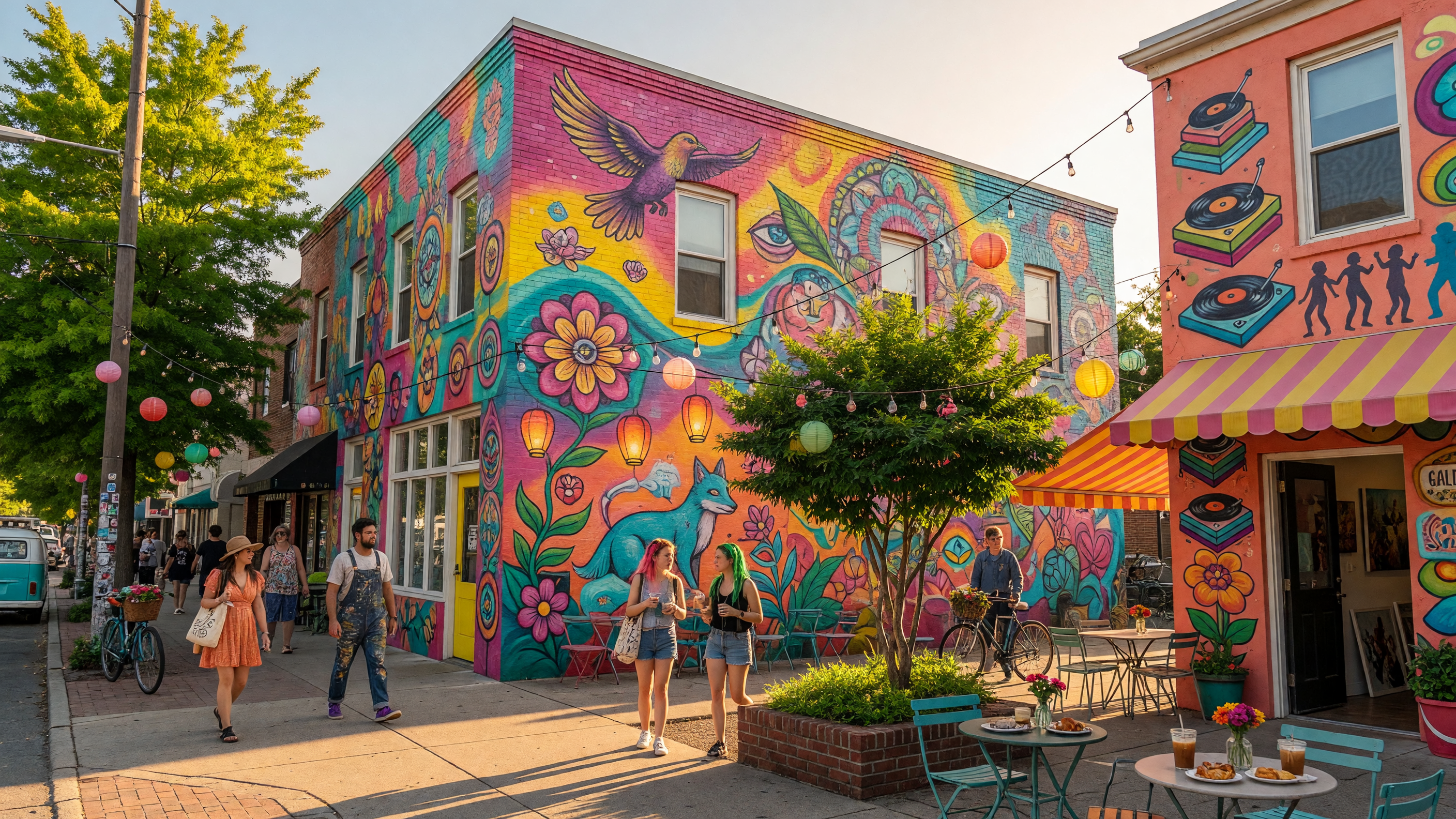
NoDa, short for North Davidson, is Charlotte's arts district, known for its galleries, breweries, live music venues and colorful murals. It suits buyers who want a walkable, creative neighborhood with light rail access to Uptown.
NoDa, short for North Davidson, is Charlotte's arts district, known for its galleries, breweries, live music venues and colorful murals. It suits buyers who want a walkable, creative neighborhood with light rail access to Uptown. Here is the neighborly, straight-from-the-streets picture of NoDa: what the housing looks like, what a typical budget gets you, how the schools and commute actually work, and where to spend a Saturday.
Real Estate Market Snapshot (2026)
These are approximate research ranges based on recent local market conditions, not a guarantee of current or future pricing. Prices move with supply, interest rates and the broader economy, and exact pricing varies by block and condition.
Approximately $350K to $625K, with renovated bungalows, lofts and new townhomes.
Renovated Craftsman bungalows, converted lofts and condos, and new townhomes near the light rail.
Inventory is moderate, and well-located homes near the arts corridor move quickly. Days on market varies by price point and condition.
Exact pricing varies by street, condition and proximity to the light rail, so treat these as approximate research ranges, not guarantees.
Popular Sub-Areas & Neighborhoods
NoDa isn't one single feel; it is a collection of pockets, each with its own housing and character. These are the sub-areas worth knowing by name when you start looking.
-
North Davidson Street corridor: The arts and entertainment spine of the district.
-
The Neighborhood Theatre area: Live music and galleries around the historic theater.
-
Cordelia Park area: Residential streets near the park, splash pad and pool.
-
Centro NoDa: Newer mixed-use development with restaurants and shops.
Cost of Living
NoDa sits at the mid range of Charlotte's housing market. As with the home prices above, treat cost-of-living figures as approximate research ranges, never guarantees; your actual budget depends on mortgage rates, property taxes, insurance and lifestyle choices.
Income tax note: North Carolina's flat personal income tax is 3.99% as of 2026, per the NC Department of Revenue. This applies state-wide, so it is the same rate whether you settle in NoDa or anywhere else in the state.
Schools
NoDa is served by Charlotte-Mecklenburg Schools (CMS). Assignments vary by street, so the exact school one address feeds can differ from the next. Always confirm a specific address with the district's official Find My School tool before buying, since assignment maps can change.
Always verify: use the district's official Find My School tool (cmsk12.org/findmyschool) to confirm the school assigned to any exact address, and double-check with the district before buying, since assignment maps can change.
Commute to Uptown Charlotte
These are estimates, not fixed numbers: actual drive times swing with the day, the weather, construction and where exactly in NoDa you live. Drive the route you would actually take, at the time you would actually take it, before you commit.
About 10 to 15 minutes to Uptown via North Davidson at rush hour.
Closer to 8 to 10 minutes off-peak, and the LYNX Blue Line provides a transit option to Uptown.
Parks, Greenways & Dining
Parks & greenways: Cordelia Park offers a splash pad, playground and pool, with greenway connections nearby.
Dining & coffee spots: Haberdish, The Goodyear House and Birdsong Brewing Co. anchor the dining and drinks scene.
Moving to NoDa? 10 Questions Answered
Oct 12, 2026 · @Tracey
It's a Friday evening at the corner of North Davidson and 36th Street. A mural glows in the last light, a band soundchecks inside a century-old theater, and the light rail glides in from Uptown with a crowd headed for the breweries. A hundred years ago, mill workers walked these same blocks. Today it's NoDa, Charlotte's historic arts district.
For relocating buyers, the creative energy is magnetic. Then come the practical questions. What does a home cost? How are the schools? Can I really skip the car? How does NoDa compare with Plaza Midwood or South End?
Whether you're moving from St. Louis or across Charlotte, here are straight answers to the 10 questions buyers ask most before moving to NoDa.
1. What is it like to live in NoDa?
NoDa is creative, walkable, and proudly a little "un-Charlotte." Murals cover building walls. Live music spills out of venues. Restored mill houses sit beside sleek new townhomes.
Life here tends to include:
- Walking to dinner, coffee, and shows around North Davidson and 36th Street
- Riding the light rail instead of fighting traffic
- Neighborhood events like gallery nights, festivals, and brewery gatherings
Residents skew toward young professionals, artists, creatives, and first-time buyers, with a growing number of families and empty nesters who want an urban lifestyle. Weekends are lively and nights can be loud near the main strip. A few blocks away, many streets feel calm and residential.
2. How much does it cost to live in NoDa?
NoDa is one of the more accessible ways to buy into Charlotte's intown lifestyle. Published 2026 estimates put the neighborhood median at roughly $420,000–$470,000. Prices still vary a lot by home type and how close the home is to the light rail.
What the spectrum looks like:
- Condos and smaller units offer the lowest entry point
- Original mill houses range widely depending on condition and renovation
- Newer townhomes near the 36th Street station often sell in the $500,000s
Property taxes combine Mecklenburg County and City of Charlotte rates. Townhome communities usually carry HOA dues, so ask for a full monthly cost estimate.
Buy vs. rent tip: NoDa has plenty of apartments, and many first-time buyers rent here first. If you plan to stay, buying lets you capture equity in a neighborhood that has steadily appreciated as Charlotte grows.
3. What schools serve NoDa?
NoDa is served by Charlotte-Mecklenburg Schools (CMS), and the school picture is mixed. Many families report positive experiences at the elementary level. Assigned middle and high schools vary by address, so research each one.
As one example, some NoDa addresses are assigned to Villa Heights Elementary, Eastway Middle, and Garinger High. Assignments differ across the neighborhood, though.
Many NoDa families also explore CMS magnet programs, charter schools, and private schools across the city. NoDa's central location and light rail access make those options easier to reach.
Important: Always confirm the assigned schools for a specific address with CMS before you make an offer. If schools are a top priority, ask your agent to compare magnet and charter options alongside the home search.
4. Is NoDa walkable, and what is there to do?
NoDa is one of Charlotte's most walkable and bikeable neighborhoods. The heart of the district centers on North Davidson Street and 36th Street, where much of daily life happens on foot.
Local favorites:
- Neighborhood Theatre: a beloved live-music venue in a historic building
- Craft breweries: NoDa helped put Charlotte's beer scene on the map
- Murals and galleries: street art and creative spaces throughout the district
- Restaurants and coffee shops: from tacos to fine dining, mostly locally owned
- Cross Charlotte Trail: a growing greenway connection for biking and running
Nearby neighborhoods such as Villa Heights, Optimist Park, and Belmont share NoDa's mill history. Together they're sometimes called the Mill District, and they add even more dining and entertainment within easy reach.
5. Can you take the light rail from NoDa to Uptown?
Yes, and that's one of NoDa's biggest advantages. The LYNX Blue Line runs right through the neighborhood, with the 36th Street station in the heart of NoDa and 25th Street and Sugar Creek stations nearby.
The ride to Uptown takes only a few minutes. The same line continues south through South End, so it's easy to reach jobs and nightlife without driving.
By car, Uptown is about 3 miles away, roughly 10 minutes. I-77 and I-85 are both close, and UNC Charlotte is a short trip north on the same light rail line.
6. How far is NoDa from the Charlotte airport?
Charlotte Douglas International Airport (CLT) is about 10–12 miles away. Plan on roughly 20 minutes off-peak and 30–40 minutes at rush hour.
Most drivers take I-77 south or cut through Uptown to I-277 and Billy Graham Parkway. The light rail doesn't reach the airport yet, so most residents drive or use a rideshare. CLT is a major American Airlines hub with abundant nonstop flights.
7. Are there historic district rules in NoDa?
Generally no local review, despite NoDa's deep history. NoDa sits within the North Charlotte Historic District, which is listed on the National Register of Historic Places. That federal listing is honorific. It does not block demolition or require city approval for exterior changes. North Charlotte is not one of Charlotte's local historic districts.
That flexibility explains the wave of new construction:
- Townhome communities have replaced older lots, especially near the light rail
- Former mill buildings have become apartments and mixed-use spaces
- Renovated mill houses sit beside modern infill homes
Before you buy with renovation or rebuild plans:
- Confirm zoning, setbacks, and lot coverage with the city
- Check for HOA rules in newer townhome communities
- Ask about nearby development plans, since new projects can change views, traffic, and noise
8. What should I know before buying a mill house in NoDa?
Mill houses offer authentic character, but they were built for function, not luxury. Many date to the early 1900s, when textile companies built modest homes for their workers. Expect smaller footprints, simple floor plans, and plenty of charm.
Ask your inspector to look closely at:
- Foundations and crawl spaces: settling, moisture, and older repairs
- Electrical: outdated wiring and undersized panels
- Plumbing and sewer lines: aging pipes and root intrusion
- Past renovations: quality varies widely, so confirm that permits were pulled
- Insulation and HVAC: original homes can be drafty
A sewer scope is money well spent. If you plan to add on, confirm zoning limits first. Also weigh the trade-off: a renovated mill house offers history and a yard, while a newer townhome offers low maintenance and a garage.
9. NoDa vs. Plaza Midwood vs. South End: which is better?
All three are walkable intown favorites, but each has a different personality. The best fit depends on whether you want art, eclectic charm, or polished city living.
| NoDa | Plaza Midwood | South End | |
|---|---|---|---|
| Vibe | Artsy, music-driven, historic mill village | Eclectic, quirky, diverse dining | Urban, energetic, newer construction |
| Typical housing | Mill houses, newer townhomes, condos | Bungalows, cottages, infill homes | Mostly condos, apartments, and townhomes |
| Approx. price point | ~$420K–$470K median | ~$720K median | ~$700K average |
| Light rail | Yes (Blue Line) | No (streetcar nearby) | Yes (Blue Line) |
| Renovation rules | No local historic review | Part is a local historic district | Standard city zoning |
Price points come from published estimates and change often. Verify current figures before you shop.
Quick take: Choose NoDa for creative energy and value, Plaza Midwood for eclectic charm, and South End for high-energy, low-maintenance city living.
10. How did NoDa become an arts district?
NoDa began as a textile mill village and was reborn through artists. Its name is short for North Davidson, the street at its heart.
The story unfolded in chapters:
- 1904: Highland Park Mill No. 3 opens as North Carolina's largest mill, with a village of worker homes across North Davidson Street
- Early 1900s: the Mecklenburg and Johnston mills follow, and North Davidson becomes North Charlotte's main street, linked to Uptown by trolley
- Mid-1900s: the mills decline, and the area struggles with lost jobs and residents
- 1986: artists Ruth Ava Lyons and Paul Sires move in and begin drawing creative businesses to the area
- Mid-1990s: locals start calling the district "NoDa"
Today the old mills have become apartments, warehouses house breweries, and mill homes have turned into galleries and residences. NoDa remains a striking example of preservation through reinvention.
Ready to explore NoDa?
In NoDa, a few blocks can change everything, from noise levels to light rail access to resale value. Whether you're a first-time buyer eyeing a townhome, a creative looking for a mill house with character, or an investor watching the neighborhood evolve, local guidance makes the difference.
As a dual-market relocation specialist with Coldwell Banker Realty, I help buyers move confidently between St. Louis and Charlotte. Reach out to tour NoDa, compare it with nearby neighborhoods, or talk through buying vs. renting in Charlotte.
Sources
- NoDa: Wikipedia (https://en.wikipedia.org/wiki/NoDa)
- How NoDa came to be: Levine Museum of the New South (https://www.museumofthenewsouth.org/?p=9902)
- NoDa perceived: past, present and future of a mill village: UNC Charlotte Urban Institute (https://ui.charlotte.edu/story/noda-perceived-past-present-and-future-mill-village/)
- NoDa and surrounding areas get a new brand: Axios Charlotte (https://www.axios.com/local/charlotte/2021/04/21/noda-and-surrounding-areas-get-a-new-brand-thats-a-nod-to-the-past-255171)
- Firehouse 7 marks 90 years in NoDa: City of Charlotte (https://www.charlottenc.gov/City-News/Charlotte%E2%80%99s-Firehouse-7-Marks-90-Years-of-Service-in-NoDa)
- Study finds some Charlotte historic districts losing ground: UNC Charlotte Urban Institute (https://ui.charlotte.edu/?p=26089)
- NoDa homebuyer's guide 2026: Doss (https://askdoss.com/noda-charlotte-charlotte-neighborhood-guide-2026/)
- The 8 best Charlotte neighborhoods: WorldAtlas (https://www.worldatlas.com/places/the-8-best-charlotte-neighborhoods-to-call-home-in-2025.html)
- Charlotte neighborhoods: John Kurtz (https://www.johnkurtzhomes.com/neighborhoods)

Written by Tracey De Simon, Realtor at Coldwell Banker Realty. Licensed in NC, SC, MO, FL.
Meet TraceyMore Living in guides
Compare NoDa with other Charlotte areas, or start from the main Moving to Charlotte guide to plan the whole move.
Considering NoDa?
Tell me what you are weighing and I'll pull current listings in NoDa for your price range, run the school and commute checks on any address, and give you an honest read on whether it fits your life. No pressure, just answers from a local broker.