
Living in University City (2026 Guide)
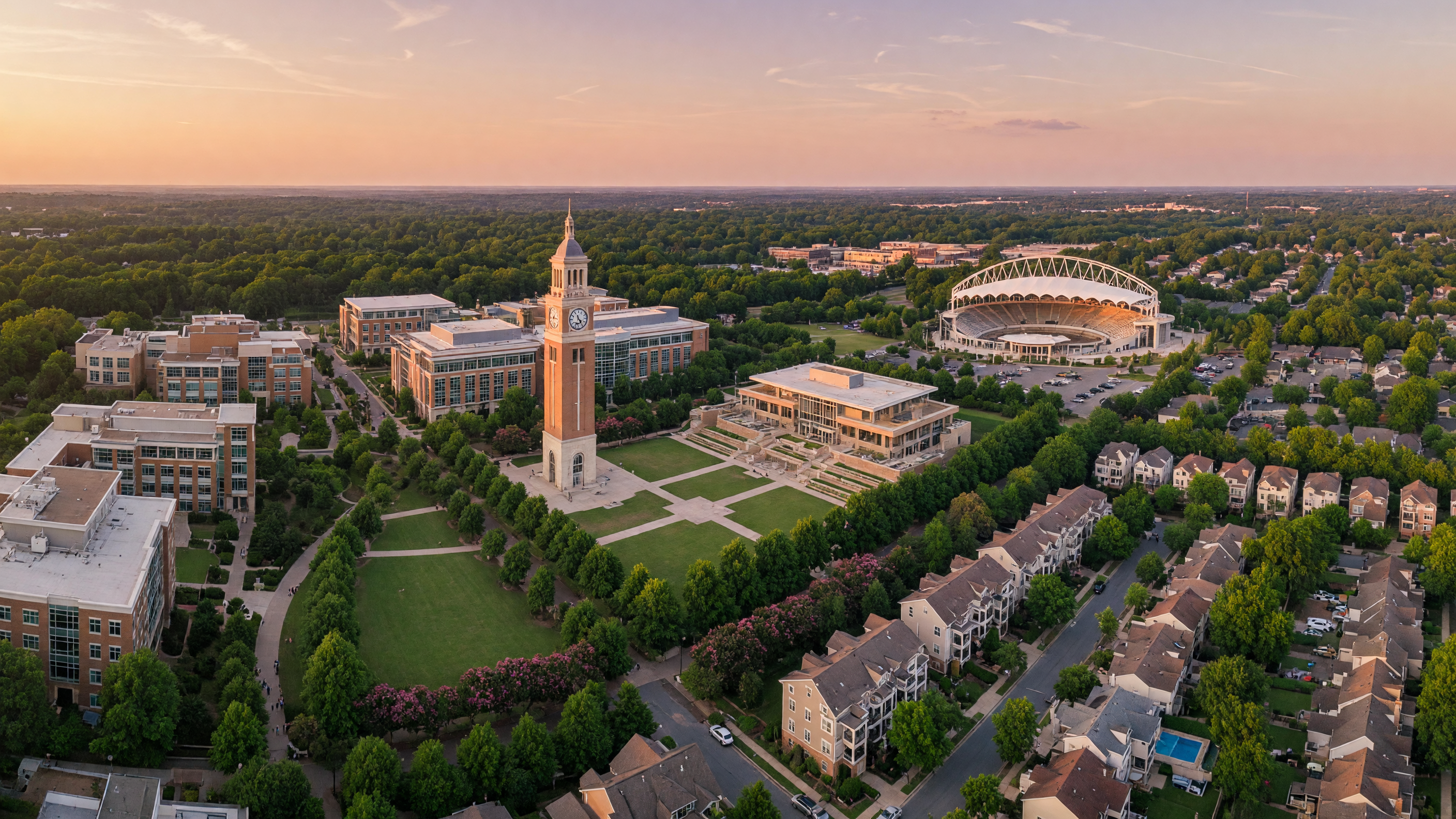
University City is the northeast Charlotte area anchored by UNC Charlotte, known for its transit access, new construction homes and some of the metro's more approachable price points. It suits buyers who want modern homes and light rail access within a short drive of Uptown.
University City is the northeast Charlotte area anchored by UNC Charlotte, known for its transit access, new construction homes and some of the metro's more approachable price points. It suits buyers who want modern homes and light rail access within a short drive of Uptown. Here is the neighborly, straight-from-the-streets picture of University City: what the housing looks like, what a typical budget gets you, how the schools and commute actually work, and where to spend a Saturday.
Real Estate Market Snapshot (2026)
These are approximate research ranges based on recent local market conditions, not a guarantee of current or future pricing. Prices move with supply, interest rates and the broader economy, and exact pricing varies by block and condition.
Approximately $180K to $750K, with a median home price around $410,000.
New construction townhomes and patio homes, mid-rise apartments and condos, new traditional single-family homes, classic ranches and luxury custom homes.
New construction and resale inventory are both steady, and well-priced homes near the light rail move quickly. Days on market varies by price point.
Exact pricing varies by community, lot and finishes, so treat these as approximate research ranges, not guarantees.
Popular Sub-Areas & Neighborhoods
University City isn't one single feel; it is a collection of pockets, each with its own housing and character. These are the sub-areas worth knowing by name when you start looking.
-
UNC Charlotte campus area: Near the university, botanical gardens and light rail.
-
University Place: A mixed-use center with shopping and dining.
-
Shoppes at University Place: Retail and dining near the campus.
-
Mallard Creek area: Established residential neighborhoods.
-
I-85 corridor: Homes with easy highway access.
Cost of Living
University City sits at the mid-to-lower end of Charlotte's housing market, below the citywide median. As with the home prices above, treat cost-of-living figures as approximate research ranges, never guarantees; your actual budget depends on mortgage rates, property taxes, insurance and lifestyle choices.
Income tax note: North Carolina's flat personal income tax is 3.99% as of 2026, per the NC Department of Revenue. This applies state-wide, so it is the same rate whether you settle in University City or anywhere else in the state.
Schools
University City is served by Charlotte-Mecklenburg Schools (CMS). Assignments vary by community and address, so the exact school one home feeds can differ from the next. Always confirm a specific address with the district's official Find My School tool before buying, since assignment maps can change.
Always verify: use the district's official Find My School tool (cmsk12.org/findmyschool) to confirm the school assigned to any exact address, and double-check with the district before buying, since assignment maps can change.
Commute to Uptown Charlotte
These are estimates, not fixed numbers: actual drive times swing with the day, the weather, construction and where exactly in University City you live. Drive the route you would actually take, at the time you would actually take it, before you commit.
About 15 to 20 minutes to Uptown via I-85 and the LYNX Blue Line at rush hour.
Closer to 12 to 15 minutes off-peak.
Parks, Greenways & Dining
Parks & greenways: The UNC Charlotte Botanical Gardens and the Cross Charlotte Trail offer outdoor space, with the Albemarle Road Recreation Center nearby.
Dining & coffee spots: The Shoppes at University Place and surrounding centers offer dining and coffee, with Topgolf and the PNC Music Pavilion nearby.
Moving to University City? 10 Questions Answered
Oct 12, 2026 ·
It's a weekday morning in University City. You walk to the light rail, scroll through emails on the ride, and step off in Uptown about 25 minutes later without ever touching traffic. That evening, you catch a concert nearby before heading home to a newer townhome that cost far less than a comparable place closer in. Welcome to University City.
For relocating buyers, University City combines value, transit, and a fast-growing job hub. Then the questions come. What does a home cost? Which schools? Is it all students? Is it a good investment? How does it compare to NoDa or Huntersville?
Whether you're moving from St. Louis or across Charlotte, here are straight answers to the 10 questions buyers ask most before moving to University City.
1. What is it like to live in University City?
University City is a fast-growing northeast Charlotte area anchored by UNC Charlotte, with transit access, newer homes, and approachable prices. It's about 12 miles from Uptown.
Life here often includes:
- Riding the LYNX Blue Line to Uptown, NoDa, and South End
- Living near a major university, with concerts, lectures, and college sports
- Newer housing options, from townhomes and condos to single-family homes
- Easy errands at University Place and nearby shopping centers
University City is a collection of areas, including the UNC Charlotte campus area, University Place, the Mallard Creek area, and the I-85 corridor.
Is it all students? No. Pockets near campus have plenty of student housing, but much of University City is made up of families, professionals, healthcare workers, and researchers who work nearby.
2. How much does it cost to live in University City?
University City offers some of the most approachable price points in Charlotte, below the citywide median. Homes typically range from about $180,000 to $750,000, with a median around $410,000.
What the spectrum looks like:
- Condos and mid-rise units: the most affordable entry point
- New-construction townhomes and patio homes: popular with first-time buyers and young professionals
- Classic ranches and new traditional homes: more space for families
- Luxury custom homes: at the top of the range
Homes near the light rail tend to sell quickly. Property taxes follow Mecklenburg County and City of Charlotte rates, and many townhome communities carry HOA dues.
Buy vs. rent tip: Rental demand from students and university staff is strong, so rents stay firm. For first-time buyers, owning here can build equity while you enjoy transit access you won't find in most suburbs.
3. What schools serve University City?
University City is served by Charlotte-Mecklenburg Schools (CMS). Schools that commonly serve the area include:
- University Meadows Elementary
- James Martin Middle School
- Julius L. Chambers High School
Assignments vary by address, and families also explore CMS magnet programs, charter schools, and private options.
Higher education is the area's anchor. UNC Charlotte, with more than 30,000 students, has the second-largest undergraduate enrollment in the UNC System. Its main campus is right here, and its Center City campus is a train ride away in Uptown.
Important: Always confirm the assigned schools for a specific address using CMS's official Find My School tool before you make an offer.
4. What is there to do in University City?
University City mixes campus energy, outdoor space, and big-name entertainment.
Local highlights:
- UNC Charlotte Botanical Gardens: free gardens and greenhouses open to the public
- PNC Music Pavilion: one of the region's largest outdoor concert venues
- Topgolf: a popular spot for date nights and team outings
- College sports: Charlotte 49ers football, basketball, and more
- Greenways: trails along Mallard Creek and Toby Creek, plus links to the growing Cross Charlotte Trail
- University Place and nearby shopping: restaurants, coffee shops, and everyday errands
For more nightlife, NoDa and Uptown are a short light rail ride away. Concord Mills and Charlotte Motor Speedway are also a quick drive northeast.
5. Can you take the light rail from University City to Uptown?
Yes. University City is the northern end of the LYNX Blue Line, which opened its extension here in 2018. The line ends at the UNC Charlotte–Main station on campus and has several stops throughout University City, including JW Clay Boulevard.
Commute options:
- Light rail: a direct ride to NoDa, Uptown, and South End without parking hassles
- By car: Uptown is about 12 miles away, roughly 12–15 minutes off-peak and 15–20 minutes at rush hour via I-85 or US-29
- Highways: I-85 and I-485 are both close for trips around the region
Tip: If you plan to use the light rail daily, prioritize homes within walking distance of a station or a park-and-ride lot.
6. How far is University City from the Charlotte airport?
Charlotte Douglas International Airport (CLT) is roughly 15–20 miles away, about 20–30 minutes off-peak. Allow extra time at rush hour.
Most drivers take I-85 south toward the airport. CLT is a major American Airlines hub with abundant nonstop flights, a handy perk for university faculty, researchers, and business travelers in the area.
7. What are the job opportunities in University City?
University City is one of Charlotte's major employment centers, not just a bedroom community. Many residents live and work in the same part of town.
Major employers and job hubs:
- UNC Charlotte: the largest higher-education institution in the region
- University Research Park: a business park of more than 3,000 acres established in 1966, home to corporate offices, research, and tech employers
- Healthcare: Atrium Health University City and related medical offices
- Retail and hospitality: shopping centers, hotels, and entertainment venues
That mix of education, research, and healthcare jobs helps keep housing demand steady, which matters to both homeowners and investors.
8. Is University City a good place to invest in real estate?
University City attracts investors for good reasons, but it pays to understand the market before you buy.
What draws investors:
- Steady rental demand from students, faculty, medical staff, and research park employees
- Light rail access, which appeals to renters without cars
- Lower entry prices than many Charlotte neighborhoods
What to check first:
- HOA rental rules: many townhome and condo communities limit or ban rentals, including short-term rentals
- City rules on short-term rentals: confirm current Charlotte regulations before planning an Airbnb-style rental
- Location: homes near campus rent easily to students but may see more turnover and wear
- Property management: budget for a manager if you won't be local
For owner-occupants: If you plan to live in the home, check how many nearby units are rentals. A mostly owner-occupied community often feels quieter and more stable.
9. University City vs. NoDa vs. Huntersville: which is better?
All three are popular north-side options, but they appeal to different lifestyles.
| University City | NoDa | Huntersville | |
|---|---|---|---|
| Vibe | University and research hub, newer homes, transit-friendly | Artsy, music-driven, historic mill village | Suburban, family-focused, near Lake Norman |
| Approx. price point | ~$180K–$750K; median ~$410K | ~$420K–$470K median | Varies; verify current figures |
| Light rail | Yes (Blue Line) | Yes (Blue Line) | No |
| Best for | Value, transit, and nearby jobs | Walkable nightlife and creative character | Suburban living and lake access |
Price points come from published estimates and change often. Verify current figures before you shop.
Quick take: Choose University City for value and transit near major employers, NoDa for creative energy and walkability, and Huntersville for a suburban lifestyle closer to Lake Norman.
10. How did University City grow?
University City grew around a college that started as a temporary night school for World War II veterans.
Key moments:
- September 23, 1946: the Charlotte Center of the University of North Carolina opens with 278 students, holding evening classes at Charlotte's Central High School
- 1949: the temporary center becomes Charlotte College, kept alive by local leaders, especially educator Bonnie Cone
- 1965: the state creates the University of North Carolina at Charlotte, the fourth campus of the UNC system
- 1966: University Research Park is established to connect industry with the university
- March 16, 2018: the LYNX Blue Line extension opens, linking University City to Uptown by light rail
What began with 278 students in borrowed classrooms is now a university with more than 30,000 students, and the surrounding farmland has become one of Charlotte's busiest growth areas.
Ready to explore University City?
In University City, the right home depends on how close you want to be to campus, the light rail, and your job. Whether you're a first-time buyer comparing townhomes, a family looking for space at a reasonable price, a researcher or faculty member, or an investor weighing rental demand, local guidance makes the difference.
As a dual-market relocation specialist with Coldwell Banker Realty, I help buyers move confidently between St. Louis and Charlotte. Reach out to tour University City, compare it with nearby neighborhoods, or talk through buying vs. renting in Charlotte.
Sources
- Living in University City (2026 Guide): Tracey De Simon (https://traceyknowscharlotte.com/living-in/university-city/)
- UNC Charlotte history: UNC Charlotte (https://chancellor.charlotte.edu/about-unc-charlotte/history)
- University of North Carolina at Charlotte: NCpedia (https://ncpedia.org/node/3604)
- Lynx Blue Line: Wikipedia (https://en.wikipedia.org/wiki/Lynx_Blue_Line)
- Phase II: UNC Charlotte 1960–Present: Google Arts & Culture (https://artsandculture.google.com/story/phase-ii-unc-charlotte-1960-present-atkins-library-unc-charlotte/3gURrm616cy1oA?hl=en)
- Find My School: Charlotte-Mecklenburg Schools (https://www.cmsk12.org/findmyschool)

Written by Tracey De Simon, Realtor at Coldwell Banker Realty. Licensed in NC, SC, MO, FL.
Meet TraceyMore Living in guides
Compare University City with other Charlotte areas, or start from the main Moving to Charlotte guide to plan the whole move.
Considering University City?
Tell me what you are weighing and I'll pull current listings in University City for your price range, run the school and commute checks on any address, and give you an honest read on whether it fits your life. No pressure, just answers from a local broker.