
Moving to
South End, Charlotte
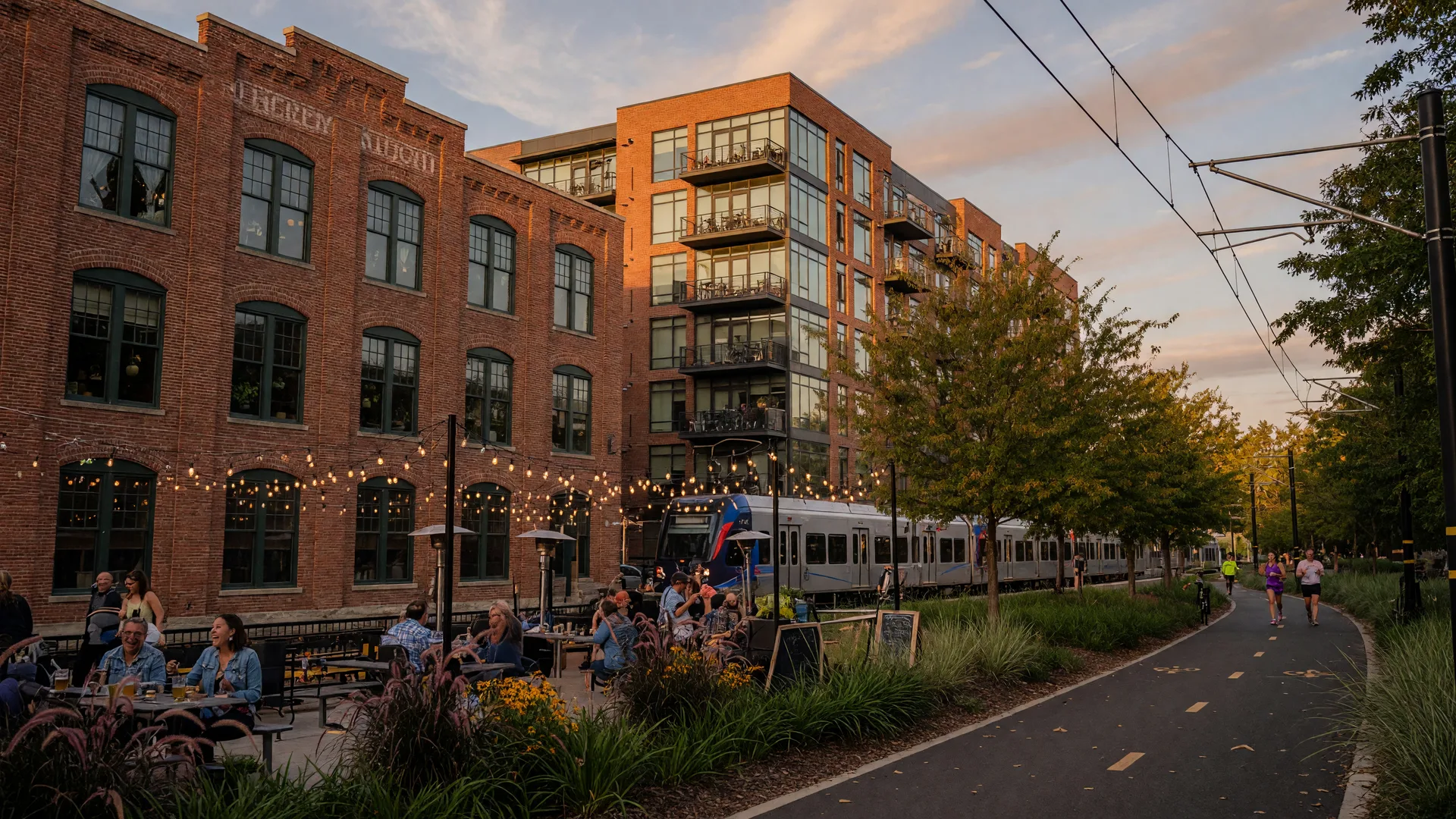
South End is Charlotte's trendiest, most walkable district: converted mill lofts, breweries and restaurants, and the LYNX Blue Line running right through it. If you want urban, walkable living minutes from Uptown, this is the neighborhood to understand first.
South End is where old Charlotte factory buildings met new Charlotte energy. The mills that once made textiles now hold lofts, offices, breweries and boutiques, and the light rail tracks that run down the middle of the neighborhood anchor it all together. Here is the practical guide to what daily life actually looks like here.
Where It Is and Distance to Uptown
South End sits just south of Uptown, roughly a five to ten minute drive or a couple of light rail stops from the center of downtown Charlotte. Its spine is South Boulevard, and the neighborhood runs along the LYNX Blue Line, which means you can literally watch the train roll through the middle of the district.
It borders Dilworth to the east, and the Rail Trail links the two, so a lot of residents walk or bike between them without ever touching a car. Being this close to Uptown is the whole point: offices, banks, the arena and the theaters are all a short hop away, yet you come home to a neighborhood with its own shops and patios.
Map note: get driving directions to South End and drop the pin around the intersection of South Boulevard and Tremont Avenue to see the heart of it.
Housing Styles
The housing stock is almost entirely urban: converted mill lofts with brick walls and big windows, modern mid-rise condos and apartments built in the last two decades, and townhomes tucked along the side streets. The lofts and townhomes right along the Rail Trail are the iconic South End image, and they stay in demand for a reason: you step out your door onto the path that leads straight to Uptown.
There are pockets of newer single-family homes too, usually a little farther off South Boulevard where the lots open up. If detached housing with a yard is non-negotiable, South End has less of it than almost anywhere else in Charlotte, and what exists sells accordingly. This is a district built for people who trade yard work for the ability to walk to dinner.
Typical Home Prices
As a general range to research, South End condos typically start around $300,000, townhomes run roughly $400,000 to $650,000, and single-family homes pick up from there and move higher. These are broad guideposts to begin your search with, not promises: exact numbers swing with building age, finishes, square footage and whether you are on the Rail Trail or four blocks off it.
South End commands a premium over most of Charlotte because the location and the lifestyle are genuinely scarce. You are paying for walkability, transit and the brewery-and-patio universe outside your door, and for many buyers that is exactly the point.
Commute Considerations
The LYNX Blue Line is the move for getting to Uptown: a few stops and you are downtown without touching the steering wheel. The neighborhood has real bike and pedestrian infrastructure, so the walk-bike commute is common too, especially since so many offices sit within a mile or two.
If you drive, South Boulevard is the main corridor and it gets crowded at rush hour, with I-277 just north giving you a fast on-ramp toward the rest of the inner loop. Once you are home, the car can sit: groceries, coffee, restaurants and the gym are all within a short walk for most residents.
Schools
South End is served by Charlotte-Mecklenburg Schools (CMS), and because the density here leans so heavily to condos and townhomes, it historically has a smaller school-age population than the suburban parts of the county. School assignments are address-specific, so we always confirm the exact building your street feeds.
Buyers who want a yard and a bigger lot often keep their search open past South End, to Dilworth, Plaza Midwood or the suburbs, while keeping the urban commute. It is a trade-off worth weighing early, because the housing mix is the biggest difference between South End and its close-in neighbors.
Shopping & Dining
This is the neighborhood that put Charlotte's brewery scene on the map. There is a genuine brewery cluster along and around the Rail Trail, plus restaurants up and down South Boulevard that range from quick lunch counters to date-night spots. The Rail Trail itself is lined with patios, coffee shops and casual places, and it turns into a social corridor on weekends.
Atherton Mill and the area around Design Center add boutiques, a food hall and marketplace energy, and the shops stretch toward the light rail stations so you can hop off and browse. For everyday needs there are groceries and services within the district, while Uptown's full retail lineup is minutes away.
Parks & Greenways
The Rail Trail is the spine: a paved, tree-lined path that runs the length of the neighborhood and connects up toward Uptown. It is the jogging, biking and dog-walking artery, and greenway connections reach out from it in several directions.
Dilworth's East and West Boulevard greenways are close by and link into the larger Little Sugar Creek Greenway network, so you can go for a long connected ride without fighting traffic. Green space here is designed around the trail system rather than big lawns, which fits the neighborhood's urban character.
Medical Facilities
Healthcare access is genuinely good. Both major systems, Atrium Health and Novant Health, have clinics, urgent care and specialty offices in South End and close-in South Charlotte, and Uptown's large hospital campuses are minutes away to the north. Routine care is walkable or a short drive for most residents, with the big hospitals a quick hop when you need them.
Recreation
Recreation here is neighborhood-scale: breweries, food halls, greenway runs and a steady calendar of events along the Rail Trail and at Atherton Mill. On game nights, the light rail becomes the cheat code, carrying you to the arena for Hornets and Knights games or into Uptown for concerts and theater without parking.
It is an active, social, get-out-the-door kind of place. If your idea of a great Saturday is a long run on the trail, a brewery patio and a light rail ride to a game, South End was built for that exact day.
Current Homes for Sale in South End
This site doesn't run a live MLS feed, but I'd love to send you what's actually on the market in South End right now. Head back to the full Charlotte move guide and tell me the areas you're weighing, or reach out directly and I'll pull current listings for your price range.
Find the full Charlotte Move guide hereVideo Tour Coming Soon
A short video tour of South End is in the works and will live right here, so you can see the lofts, the Rail Trail and the brewery district before you visit.
Map It
Get directions to South End and look along South Boulevard, the Rail Trail and the Blue Line stations to see how the district fits together.

If you're weighing South End against Plaza Midwood or NoDa, you're asking exactly the right question: they all deliver walkable urban living, just with different personalities. Tell me what you're comparing and I'll lay out the commute, prices and housing trade-offs with real numbers.
Is Urban Charlotte Right for You?
South End is a lifestyle choice as much as a location choice. Tell me what you're weighing and I'll give you an honest read on whether this district fits your daily routine.
Prefer to talk it through? Book a free relocation call and we'll decide together whether South End's urban energy fits your move.
Schedule a Relocation Call